The Editorial Ear
Music writing often falls into one of two traps. Either it treats songs as lifestyle wallpaper with vague adjectives ("lush," "vibey," "soaring"), or it locks the door behind conservatory terminology ("enharmonic modulation to the Neapolitan sixth") without explaining what your ears are actually experiencing.
Puremelodytreluim was founded in London to build a bridge between those two worlds. We believe that anyone who has ever rewound a song to hear a ten-second bridge a second time is already thinking like a musician. Our job is simply to name the mechanism inside that moment and tell the human story of how it got there.
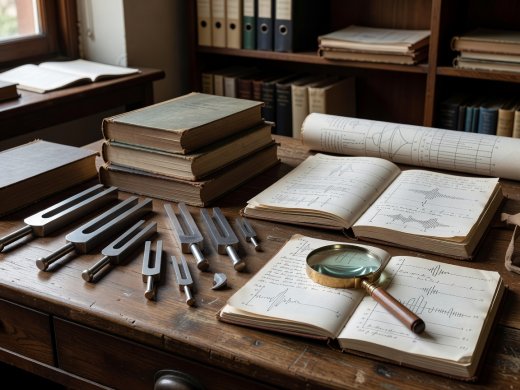
Our Three Listening Rules
- Start with an Audible Clue: Every feature begins with something a listener can notice in real time—a repeated rhythm, a woody string buzz, an abrupt silence, or an octave leap—before introducing historical or theoretical background.
- Define Every Technical Term on Arrival: Words like timbre, ostinato, agogic accent, and re-entrant tuning are useful tools, never badges of exclusivity. Whenever we use a musicological term, we explain its physical meaning in the very same sentence.
- Respect the Whole Map of Sound: A five-note phrase played on a West African kora, an 18th-century Leipzig organ fugue, and a 1970s Kingston dub bassline deserve the exact same analytical care and historical rigor.
Contributors & Research Desk
Former orchestral violist and acoustic researcher specializing in melodic contour, temperament history, and chamber architecture.
Instrument restorer and music historian documenting transatlantic rhythm exchanges, bridge-harps, and early electrophones.
Have a question or a correction for our editorial team? We welcome correspondence from listeners, luthiers, performers, and archivists alike.