Stone Vaults vs. Dry Parlors: Architecture as an Instrument
Acousticians measure a room by its RT60—the number of seconds it takes for a loud sound to decay by 60 decibels after the source stops playing. In a Gothic stone cathedral like Notre-Dame de Paris or St. Mark's Basilica in Venice, the RT60 can exceed six to eight seconds. If a choir in that space sang rapidchord changes, yesterday's chord would still be bouncing off the limestone pillars while today's chord arrived, creating muddy dissonance.
Consequently, medieval composers like Pérotin wrote slow, luminous vocal lines over long-held pedal notes, letting the building itself mix the notes in mid-air into shimmering chords. By contrast, when Johann Sebastian Bach served as cantor at the Thomaskirche in Leipzig in the 1720s, the wooden galleries, tapestries, and winter coats of the congregation absorbed echoes, dropping the reverberation time to roughly 1.6 seconds. That drier room allowed Bach to write rapid, intricate four-part fugues and nimble harpsichord lines where every sixteenth-note remained crystal clear.
The Three-Minute Shellac Ceiling and the 1948 LP Revolution
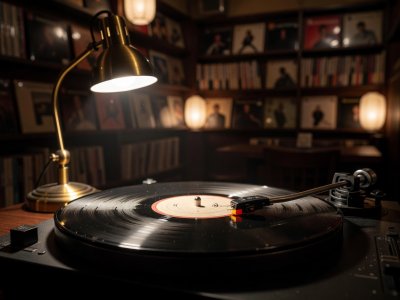
When Emile Berliner's flat gramophone discs replaced Thomas Edison's wax cylinders at the turn of the 20th century, engineers faced a stubborn physical trade-off: the louder and deeper you cut the groove so a heavy steel needle could play it without electricity, the fewer grooves fit onto a 10-inch disc. At 78 rpm, a side held between two minutes and forty seconds and three minutes and twenty seconds.
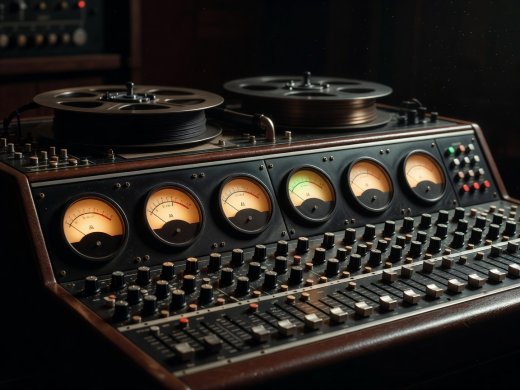
When Duke Ellington, Bessie Smith, or Bill Monroe entered the studio in the 1920s and 1930s, a red warning light flashed when twenty seconds remained on the wax master disc. Bandleaders learned to state the main melody immediately, give the saxophonist or fiddler an eight-bar solo, and hit a crisp ending before the wax ran out. Even after Columbia Records engineer Peter Goldmark introduced the 33⅓ rpm vinyl Long Playing (LP) microgroove record in June 1948—allowing 22 minutes per side—radio stations and jukebox manufacturers built their machines around the three-minute 45 rpm single, cementing the verse-chorus-bridge economy we still hear today.
 Tokyo · 1950s–Present